


- About
-
-

- About
-
ACGIH is a 501(c)(3) charitable scientific organization that advances occupational and environmental health.
-
-
- Subscriptions
-
-
-
Get valuable benefits that are vital to your health and safety as an occupational, environmental, health, and safety worker.
-
-
- Science
-
-
- Science
-
This section has been established to help educate industry, government, and the public on what TLVs and BEIs are, and how TLVs and BEIs may best be used.
-
-
- Career Development
-
-
- Career Development
-
ACGIH is committed to providing its members and other occupational and environmental health professionals with the training and education they need to excel in their profession.
-
-
- Publications
-
-
- Publications
-
ACGIH has publications in many different areas that fit your needs in your field.
-
- Publications Store
ACGIH Digital Library
If you need to purchase the Digital Library, click here.
If you have purchased and need to access the Digital Library, click here.
-
-


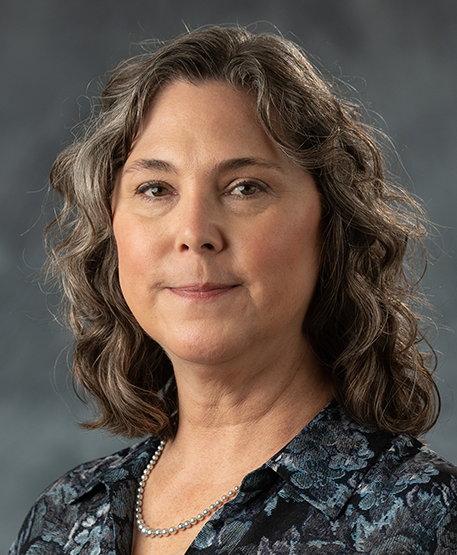
The Herbert E. Stokinger Award is given each year to an individual who has made a significant contribution in the broad field of industrial and environmental toxicology.
The 2026 Herbert E. Stokinger Award recipient is Alison C.P. Elder, PhD.
Dr. Elder, Professor of Environmental Medicine and Public Health Sciences at the University of Rochester School of Medicine and Dentistry, is an inhalation toxicologist with research interests that include the pulmonary, cardiovascular, and central nervous system inflammatory and oxidative stress-related effects of air pollution and engineered nanomaterials. Particle biokinetics and the impacts of age and other underlying vulnerabilities on response are also of interest. She is a member of the University’s Institute for Human Health and the Environment and the NIHES-funded Environmental Health Sciences Center. She directs the Center’s Inhalation Exposure Facility and co-directs the Rochester Toxicology PhD Training Program. Dr. Elder has authored numerous research papers in the field, as well as review articles and book chapters, and serves on several editorial boards. She also served for over 15 years on the Threshold Limit Value-Chemical Substances committee of the American Conference of Governmental Industrial Hygienists and co-chairs the Particles and Inorganics subcommittee.
Dr. Elder will be presenting the Stokinger Lecture at the ACGIH 2026 Award Winner Recognition & Virtual Annual Meeting on October 28, 2026.
Lecture Title: “Exposure Characterization and Tissue Dosimetry are Key Elements of Rigor in Inhalation Toxicology Research”
Lecture Overview:
Dr. Elder’s research focuses on exposure and dose characterization that supports the building of meaningful exposure–dose–response relationships. Her work has emphasized designing studies with human dose relevancy, accounting for dose rate, and applying dosimetry modeling to connect animal inhalation studies to deposited doses in specific regions of the human respiratory tract.
Dr. Elder’s findings have also contributed directly to practical guidance that protects health. As an example, her research demonstrates the importance of particle surface area as a determinant of lung effects, which has helped inform occupational exposure guideline development for poorly soluble particles. Beyond the respiratory tract, her inhalation exposure studies have advanced the translational understanding of ultrafine particle impacts in extrapulmonary systems. Her work with manganese oxide ultrafine particles helped demonstrate brain accumulation in part via olfactory neuronal transport, and her studies of ultrafine particles and inflammatory changes in the cardiovascular and central nervous systems have helped catalyze broader evaluation of neurodegenerative, inflammatory, and behavioral effects relevant to particulate matter health assessments.
She continues to apply this translational approach to emerging concerns, including airborne nano- and microplastics, aiming to close knowledge gaps on exposure pathways so that basic science studies can be designed with a strong translational foundation.
Previous Award Recipients
- 1977 — John A. Zapp, PhD
- 1978 — Ralph C. Wands, CIH
- 1979 — Henry F. Smyth, Jr., PhD
- 1980 — Anna Baetjer, MD
- 1981 — Ernest Mastromatteo, MD
- 1982 — Hervey B. Elkins, PhD, CIH
- 1983 — Theodore Torkelson, ScD
- 1984 — Carrol S. Weil
- 1985 — Roger O. McClellan, DVM
- 1986 — Emil A. Pfitzer, ScD
- 1987 — Robert T. Drew
- 1988 — Melvin E. Andersen, PhD
- 1989 — Mary O. Amdur, PhD, CIH
- 1990 — Bernard Weiss, PhD
- 1991 — Renate Kimbrough, MD
- 1992 — John Doull, PhD, MD
- 1993 — Morton Lippmann, PhD, CIH
- 1994 — Robert Lauwerys, MD, ScD
- 1995 — Cesare Maltoni, MD
- 1996 — Elizabeth K. Weisburger, ScD, PhD
- 1997 — Herbert E. Christensen, ScD, MPH
- 1998 — Walter W. Melvin, Jr., ScD, MD
- 1999 — Roy Ernest Albert, MD
- 2000 — George M. Rusch
- 2001 — Gunnar Johanson, Doctor of Medical Science
- 2002 — Robert A. Scala, PhD
- 2003 — Prof. Dr. med. Helmut Greim
- 2004 — Hanspeter Witschi, MD
- 2005 — B. Dwight Culver, MD
- 2006 — Richard B. Schlesinger, PhD
- 2007 — Gerald L. Kennedy, Jr., DABT
- 2008 — Curtis D. Klaassen, PhD
- 2009 — Vincent Castranova, PhD
- 2010 — Bruce D. Naumann, PhD, DABT
- 2011 — Len Levy OBE, PhD, FFOM, FBTS
- 2012 — Michelle M. Schaper, PhD
- 2013 — Günter Oberdörster, DVM, PhD
- 2014 — Franklin E. Mirer, PhD, CIH
- 2015 — Nigel Walker, PhD, DABT
- 2016 — William D. Wagner
- 2017 — John Cocker, PhD
- 2018 — Mark D. Hoover, PhD, CHP, CIH
- 2019 — Vincent Castranova, PhD
- 2020 — Dr. Robert Landsiedel
- 2021 — M. Andrew Maier, MS, PhD, CIH, DABT, FAIHA
- 2022 — Terry Gordon, PhD
- 2023 — Edward Calabrese, PhD
- 2024 — Martyn T. Smith, PhD
- 2025 — Dennis J. Paustenbach, PhD, CIH, DABT